
article · Published 31 July 2026 · By Pride Legal Thailand
Bangkok’s pink economy after marriage equality. The reported numbers, the WorldPride 2030 bid, and what it means for a couple marrying in Thailand.
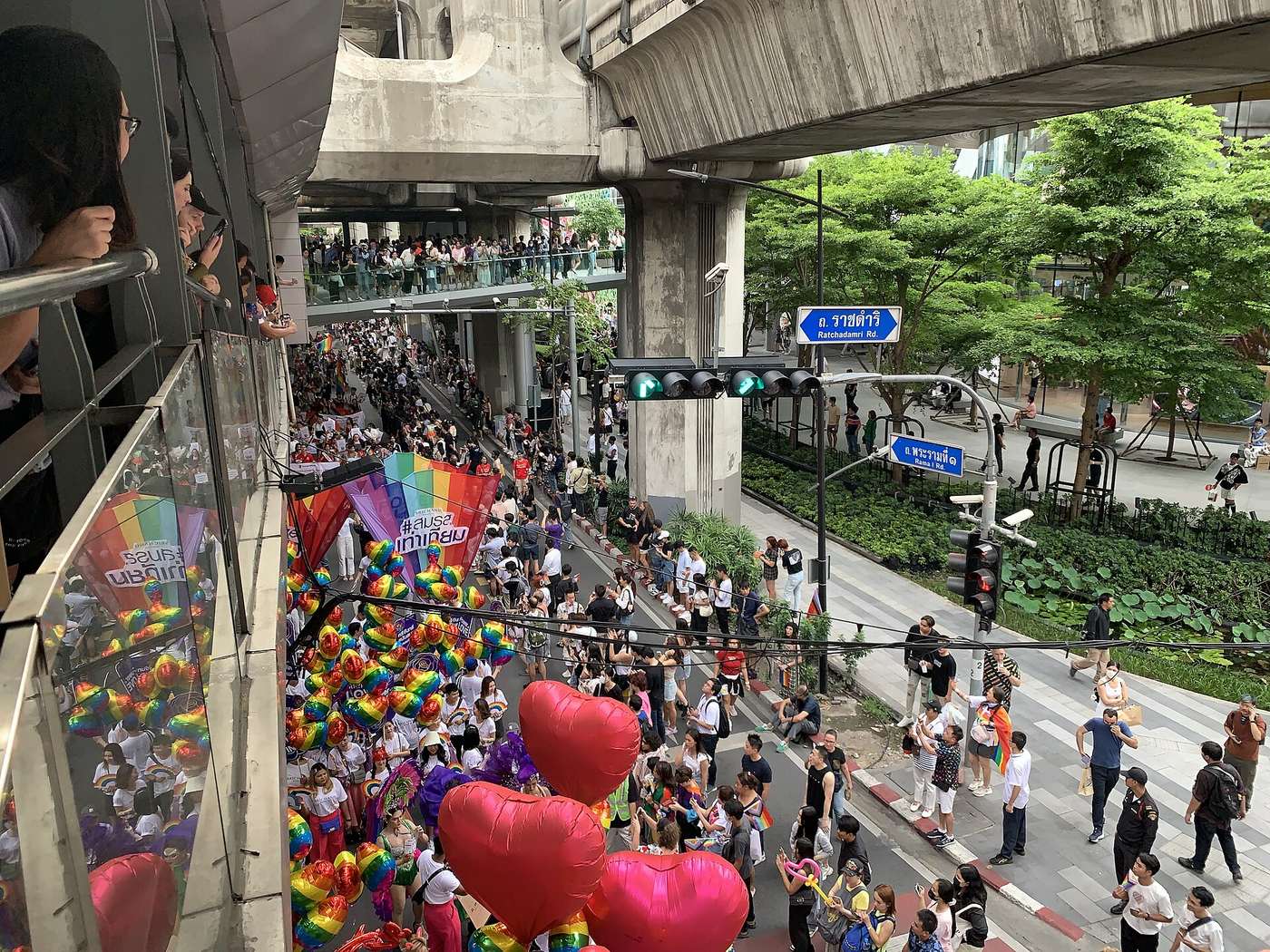
Photo: Bangkok Pride 2024 (01-06-2024) - img 05, by Chainwit., CC BY 4.0, Wikimedia Commons
The pink economy is the economic activity generated by LGBTQ people, as consumers, as travellers and as a market that businesses court deliberately. Bangkok has had a version of it for decades, built on nightlife and tourism. What is new since Thailand’s marriage equality law took effect in January 2025 is its scale, its official endorsement and its ambitions. The government now chases what it calls the pink baht, the city is bidding to host WorldPride 2030, and the numbers being reported around it have grown from bar-street revenue into a national economic argument. This article follows what has been reported, and what it means for a couple watching from abroad.
Behind the figures sits a practical change: two foreigners can now register their marriage in Bangkok without any connection to Thailand.
The estimates come from several directions and they point the same way. Bangkok Pride 2025 and its surrounding events were estimated to generate up to four and a half billion baht in revenue, counting sponsorships and tourism spending, according to figures reported in the Thai press. The Tourism Authority of Thailand estimates revenue from LGBTQ tourists at around two billion United States dollars per year. Globally, the spending power of LGBTQ consumers is estimated at more than four trillion dollars, which is the market Thailand is positioning itself to serve. These are estimates and projections rather than audited results, and they should be read that way. Their direction, however, matches what is visible on the ground.
Before 2025, Thailand marketed tolerance. After 2025, it can market law. A country where two people of any gender can marry, adopt and inherit is making a different offer than a country with friendly nightlife, and the tourism industry understood the difference immediately. The Tourism Authority joined Bangkok Pride, hotels and retailers built campaigns around Pride Month, and one of Bangkok’s largest retail groups has publicly framed the rainbow economy as a growth strategy. Marriage itself became an industry. Couples who once flew to Taipei or further now fly to Bangkok, and each marriage brings flights, hotels, venues, photographers, families and return visits.
Bangkok is campaigning to host WorldPride 2030, the largest international LGBTQ event, which rotates between world cities and brings weeks of visitors, media and business events. The bid is itself a signal. A city bids for WorldPride when it believes its infrastructure, its politics and its public are ready to be looked at closely, and Thailand’s bid rests on the legal foundation the marriage law provides. Whether or not the bid succeeds, the campaign has already pushed the city’s institutions to invest in the community’s visibility.
Economic enthusiasm is not the same thing as finished equality. Thailand still lacks a legal gender recognition law, and advocates inside the country point out that a strong Pride economy can coexist with unfinished rights. The pink economy is also unevenly distributed, concentrated in Bangkok and the tourist provinces rather than spread across the country. Reading the numbers with these limits in mind gives a truer picture than the headlines alone.
For a foreign couple, the pink economy is not an abstraction. It is the reason Bangkok has hotels that compete for your wedding, vendors that have served couples like you before, and a city where a same-sex wedding party is ordinary commerce rather than a novelty. The legal infrastructure and the commercial infrastructure are growing together, and the couple arriving in 2026 lands in a city that wants them there. Pride Legal Thailand is part of that infrastructure, built to make the marriage itself plannable from abroad and completable in a single trip.
This article is general information about Thailand’s pink economy. It is not legal or financial advice, and the figures quoted are public estimates attributed to their sources rather than audited results.
Pride Legal Thailand arranges the registration of marriages in Thailand for two people of any gender and any nationality. The fee is ฿49,000 (~1,480 USD) for both partners, fixed, with VAT and government fees included; registration outside the Bangkok region costs ฿10,000 (~300 USD) more.
What the Pride Legal Marriage service includes is set out on the service page. The steps in order: how two foreigners can get married in Thailand.
General information, not legal advice for a specific case. A couple's exact path depends on their countries and documents. Ask ELSA or write to help@pridelegal.co.th.
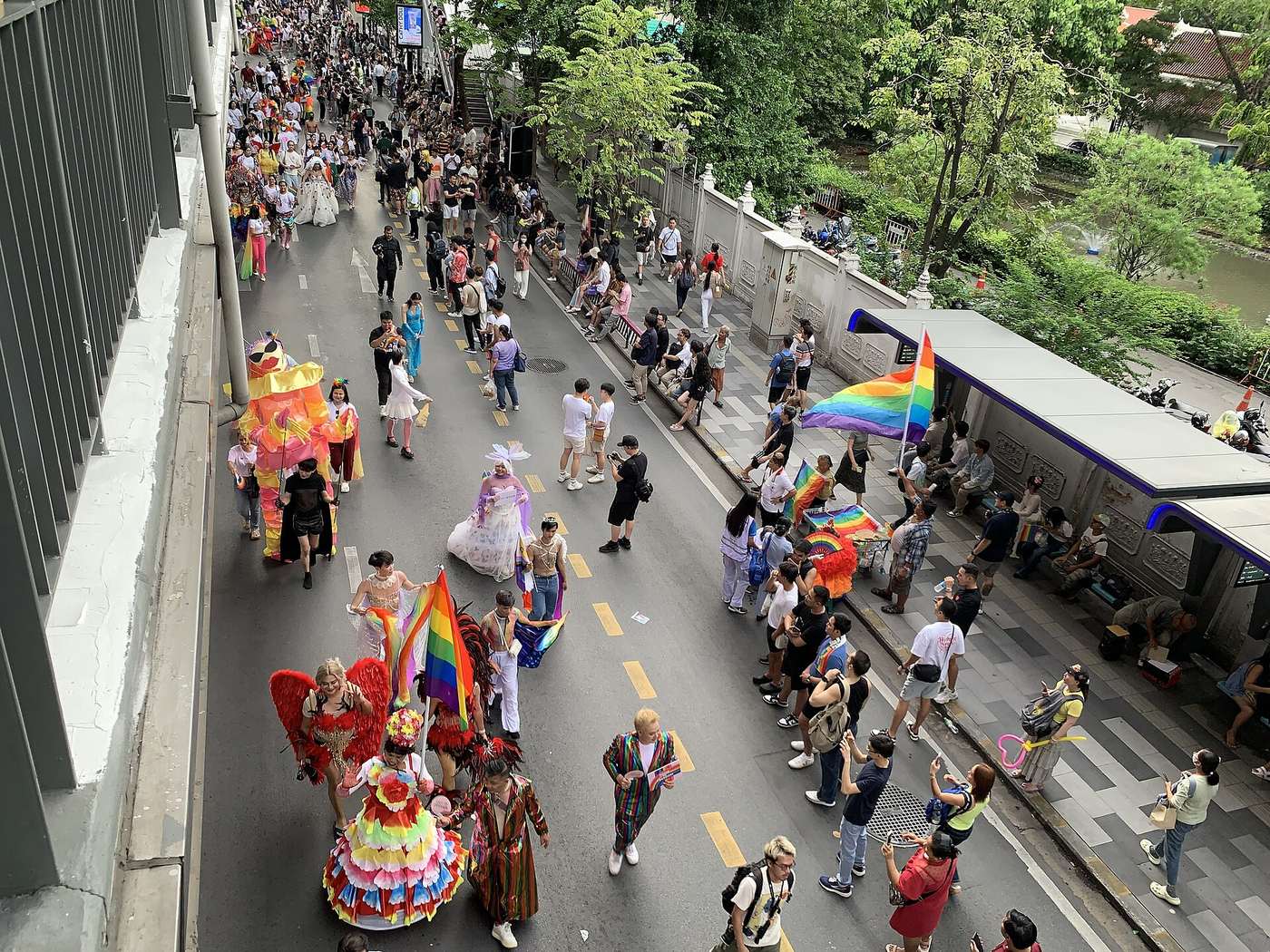
article · 27 July 2026
Thailand’s Marriage Equality Act, one year on. The legal change, the tourism economy, the wedding industry, human rights and the region.
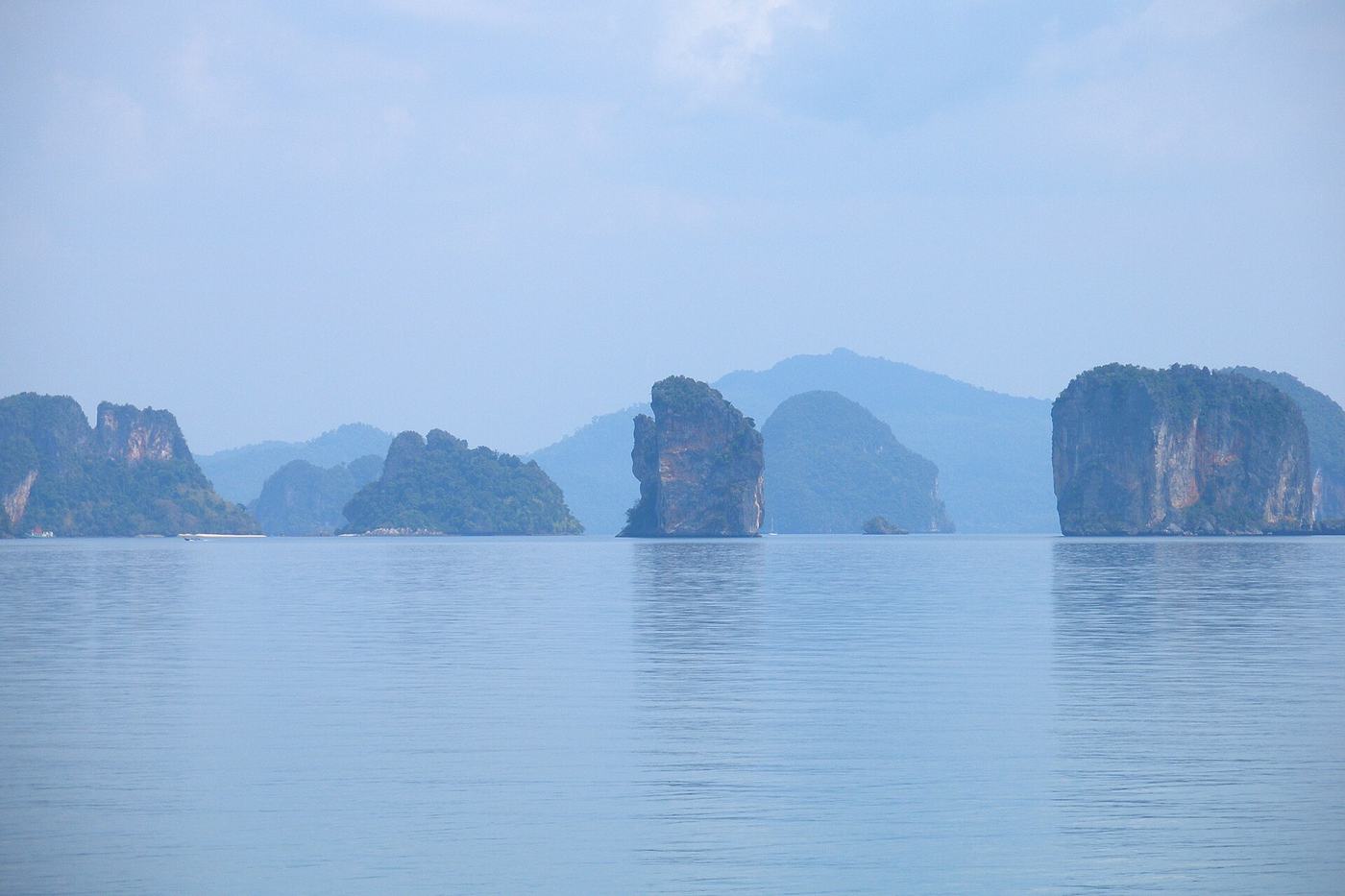
article · 29 July 2026
Eight places in Thailand for a destination marriage, from Phuket to Koh Yao Noi, with the honest character of each and where the legal step fits.
 ELSA
ELSA