
guide · Published 21 July 2026 · By Pride Legal Thailand
Since 23 January 2025 two foreigners of any gender can marry in Thailand: the two documents, the legalization chain, translation and the district office.
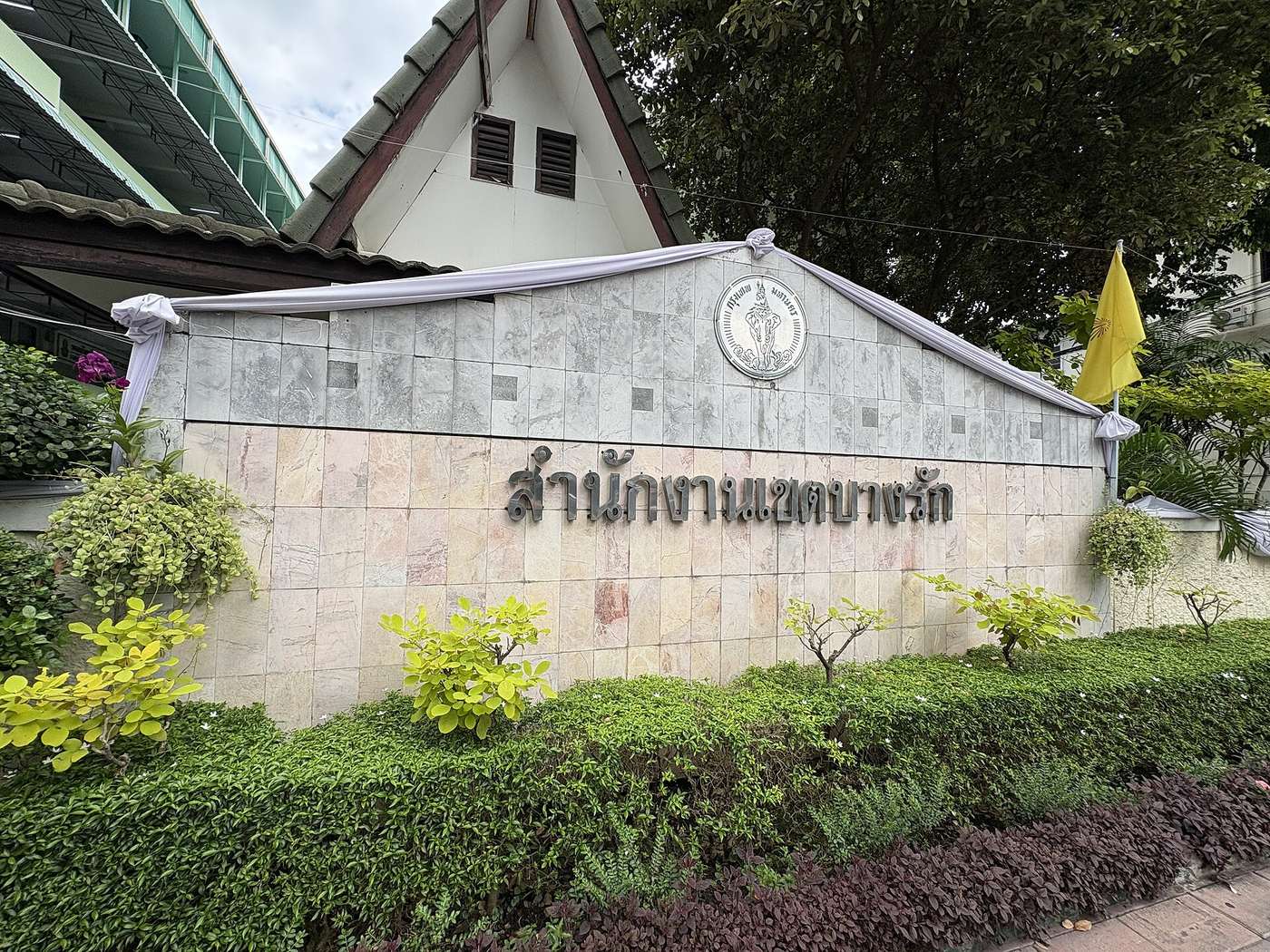
Photo: Bang Rak District Office สำนักงานเขตบางรัก (2026) - IMG 03, by Chainwit., CC BY 4.0, Wikimedia Commons
Since 23 January 2025, two foreigners of any gender can legally marry in Thailand. Neither of you needs to be Thai. Neither of you needs to live in Thailand. What you need is two key documents for each of you, a certified Thai translation of those documents, evidence that your relationship is genuine, and a visit to a district office with a translator and two witnesses. Each of these steps is simple on its own. The difficulty is that they run across two or three countries, and no single authority tells you the full sequence. Pride Legal Thailand was created to become the platform for the LGBTQ community around the world looking to get married in Thailand. We make this plannable from abroad and completable in a single trip. This guide explains the full sequence, whether you use us or not.
If you would rather not manage the sequence yourself, our marriage registration service in Thailand checks your documents, translates and legalizes them, books the district office and attends the registration with you.
Thailand’s Marriage Equality Act came into force on 23 January 2025. It made marriage a contract between two persons, regardless of gender and regardless of nationality. The conditions are short. Both of you must be single, and you must prove it with documents, because Thai law forbids a person from marrying while they already have a spouse. You must not be close blood relatives. If either of you was married before, you must show the divorce judgment or the death certificate that ended that marriage. There is no residency requirement and no waiting period. The marriage becomes valid the moment the registrar records it.
Each partner needs two key documents. The first is an identification document, and a copy of your passport that is correctly translated and legalized is what the registrar accepts. The second is a document that proves you are single. That document goes by different names in different countries: a certificate of no marriage record, a certificate of singleness, or an affidavit of freedom to marry. It must be an official document, or a notarized self-sworn declaration, stating that you are single or have no record of marriage. You should also gather evidence that your relationship is genuine, such as photos together from different occasions, travel history, proof of shared payments and co-living bills. This evidence supports your application and does not need any legalization.
The service page lists the two documents each partner brings, the fee and what it covers: fees and documents for marrying in Thailand.
There is no single route that fits every couple, because each country issues its proof of singleness in its own way and each embassy has its own practice. For some nationalities, the documents are issued and legalized entirely in your home country before you fly. For others, documents from home are brought to your country’s embassy in Bangkok, which issues the affidavit there. For a few, the embassy in Bangkok issues the document only after you arrive. Some countries offer more than one workable path, and the right choice depends on where you live, how much time you have before flying, and your embassy’s rules. Where an embassy is involved, you generally must appear in person, and a power of attorney cannot replace that appearance. Gathering the documents before you fly usually takes about one week to one month, depending on your nationality and the path you choose.
A Thai registrar has no way to verify a foreign stamp or a foreign signature. Legalization solves this. Legalization is the chain of certifications by which each authority confirms the signature of the authority before it, so that the final reader can trust the first document. The shape of the chain depends on where a document is issued. A document issued in your home country is certified there, then authenticated by your country’s own authorities, and then legalized by the Royal Thai Embassy or Consulate in that country before you fly. A document issued at your embassy in Bangkok takes a shorter chain, because the Thai Ministry of Foreign Affairs certifies the embassy’s signature directly. In both cases the Thai Ministry of Foreign Affairs applies the final stamp in Thailand, and after that stamp every district office in the country can trust the document. The rule of the chain is fixed. Each stamp only confirms the stamp before it, so the order can never be skipped.
Every document must be in Thai when it reaches the registrar. The translation is done by a certified translator, and the Thai Ministry of Foreign Affairs legalizes the translation together with the original. The translation can be prepared before you arrive, but the ministry’s legalization cannot begin before you land, because it requires the immigration entry stamp in your passport. The ministry takes three to five working days, and it does not offer a guaranteed maximum window. The certified stamp on the translation is what the district office actually reads. A translation without the ministry’s stamp is not usable, however accurate it is.
Marriage registration happens at a district office. In Bangkok the office is called a Khet. Outside Bangkok it is called an Amphur. The law is the same at every office, but the practice is not. There is no central booking system, most offices will not hold a date before the legalized documents are ready, and the decision to register a marriage that rests on foreign documents belongs to the head of that district office. Some districts see foreign couples every week and know the document set well, while others see them rarely, so the office and the date need coordination rather than a walk-in. Both partners must attend in person. You bring the legalized documents, your passports, a translator so that you understand what you sign, and two witnesses. You sign before the registrar and receive the Thai marriage certificate the same day. Ask for certified copies while you are there, because your home country will want one.
The sequence above is why a short trip fails without preparation. The document gathering, the translation, the ministry’s legalization and the district office each take their own time, and each depends on the one before it. Start roughly one to two months before flying, and not more than about three months before your planned date, because the documents can expire. Prepared in the right order, the chain fits inside a single trip. Six working days after the embassy step is the bare minimum for the Thai side, and eight to ten working days is what we recommend.
Our answers on how long you need to stay in Thailand give the same counts in working days, with the days the Ministry of Foreign Affairs needs.
Pride Legal Thailand arranges the registration of marriages in Thailand for two people of any gender and any nationality. The fee is ฿49,000 (~1,480 USD) for both partners, fixed, with VAT and government fees included; registration outside the Bangkok region costs ฿10,000 (~300 USD) more.
What the Pride Legal Marriage service includes, and how the fee is paid in three stages, is set out on the service page. After the registration, how to use your Thai marriage certificate in another country.
General information, not legal advice for a specific case. A couple's exact path depends on their countries and documents. Ask ELSA or write to help@pridelegal.co.th.
guide · 28 July 2026
Thailand issues no apostille. The four steps, copy, translation, ministry, embassy, that make a Thai marriage certificate usable at home.

article · 23 September 2026
Thai law lets only an interested person inspect the marriage register, and there are no banns. Who qualifies, and what the rules cannot promise.
 ELSA
ELSA