
article · Published 7 August 2026 · By Pride Legal Thailand
The auspicious date, the merit-making, the Khan Maak procession and the water blessing, what each means, and how foreign couples include them.
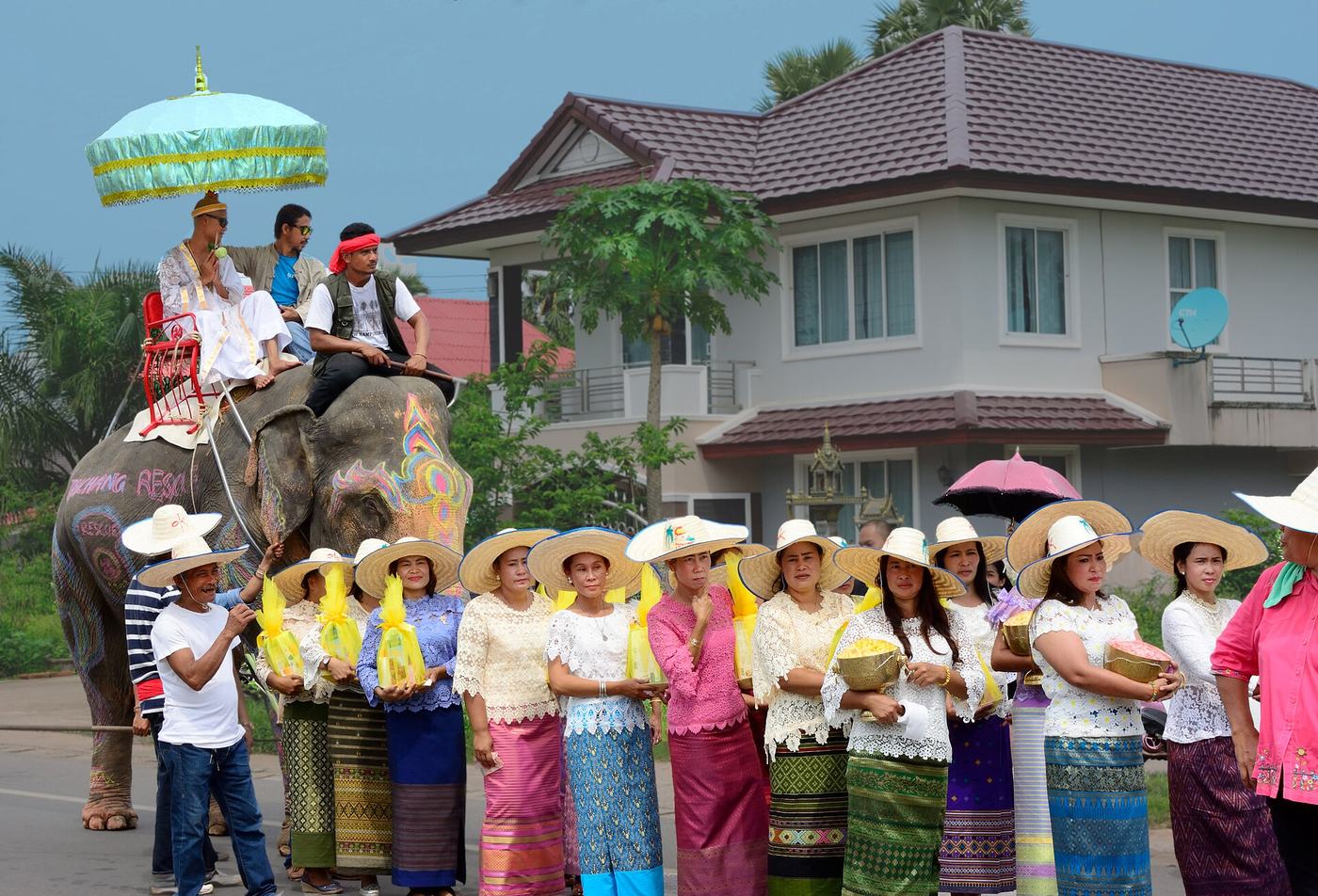
Photo: Traditional Thai Wedding Ceremony, by AjarnRichard, CC BY-SA 4.0, Wikimedia Commons
A couple marrying in Thailand stands inside one of the world’s richest wedding cultures, and none of it is reserved for Thais. Thai ceremonies are built from elements, a water blessing, a joined thread, a procession, a morning of merit-making, and Thai celebrants have long experience composing them for foreign couples, including couples of the same gender, for whom the traditions adapt without strain because none of them depends on the couple’s genders. This article explains the main traditions, what each one means, and how couples fold them into a destination wedding without pretending to a heritage that is not theirs. Borrowing respectfully means understanding what a ritual says before you say it.
None of these ceremonies is the legal marriage. The registration is a separate step, arranged through our marriage registration service in Thailand, and this article is about the ceremonies.
Thai weddings traditionally begin before the wedding, with the date itself. Families consult monks or astrologers to choose an auspicious day and hour, because in Thai belief the moment a marriage begins shapes its fortune. Foreign couples adopt this in two ways. Some genuinely consult, through their celebrant or planner, and let the calendar move. Others simply learn which dates carry meaning and choose one deliberately. Either way, the couple gains something a Western calendar cannot give, a wedding date with a story attached.
Many Thai weddings open at dawn with merit-making, in which the couple offers food to monks and receives a blessing. Merit, in Thai Buddhist practice, is the good accumulated by generous acts, and beginning a marriage by making merit together is the tradition’s way of starting the ledger well. Foreign couples can arrange a monks’ blessing through most resorts and planners. It asks for early rising, modest dress and quiet attention, and couples who include it consistently describe it as the moment the wedding stopped feeling like a performance.
The Khan Maak is the procession in which one partner’s family carries gifts, trays of fruit, flowers, and symbolic offerings, to the other’s, singing and dancing the whole way, negotiating past playful barriers of friends who demand tolls before the couple can meet. It is loud, funny and communal, the opposite of solemn. Destination couples with guests stage it between villas or along a beach, and couples of the same gender simply choose who processes to whom, or process toward each other, which Thai planners have already staged many times since the law changed.
The rod nam sang is the element most couples keep when they keep only one. The couple kneels side by side, hands pressed together and joined by the sai monkhon, a white thread crowning both heads to bind their fortunes, while elders and guests pour scented water over their hands one by one, each pour a personal blessing. Water carries blessing in Thai belief, and the line of guests means every person present touches the marriage individually. The ritual needs no shared language, which is why it works so well for mixed guest lists, and it photographs like nothing else in the wedding.
Thailand’s regions dress the ceremony differently. Chiang Mai and the north stage Lanna-style weddings, with northern textiles, drummers and lantern-lit evenings. Phuket carries the Peranakan Baba wedding style, a legacy of its Chinese-Malay trading families, with its own costumes and processions. Couples marrying in those places can borrow the local form rather than a generic one, which honours the actual place they chose. A good local celebrant or planner is the difference between borrowing a tradition and imitating one, and they are easy to find in every wedding region.
None of the ceremonies above marries you in law. The legal marriage happens at a district office, through the document chain every foreign couple completes, and the traditional ceremony happens wherever and however you choose. Couples therefore compose freely, a district office morning in Bangkok, a monks’ blessing at the resort, a water ceremony at sunset, without any ritual having to double as paperwork. We handle the legal half, plannable from abroad and completable in a single trip, so the ceremony half stays entirely yours.
The document chain every foreign couple completes is described in documents and steps for marrying in Thailand.
Pride Legal Thailand arranges the registration of marriages in Thailand for two people of any gender and any nationality. The fee is ฿49,000 (~1,480 USD) for both partners, fixed, with VAT and government fees included; registration outside the Bangkok region costs ฿10,000 (~300 USD) more.
What the Pride Legal Marriage service includes is set out on the service page. The steps in order: how two foreigners can get married in Thailand.
General information, not legal advice for a specific case. A couple's exact path depends on their countries and documents. Ask ELSA or write to help@pridelegal.co.th.

article · 11 September 2026
A vow renewal in Thailand carries no legal effect. What the Buddhist blessing and water ceremony involve, and the rule for couples already married abroad.
article · 5 August 2026
Which countries marry foreign same-sex couples without residency, what each trades off, and where Thailand now fits among them since 2025.
 ELSA
ELSA